
Buyer’s Guide
Flat-Floor Ute Trays: Sheet Loads, Long Materials & Custom Cargo
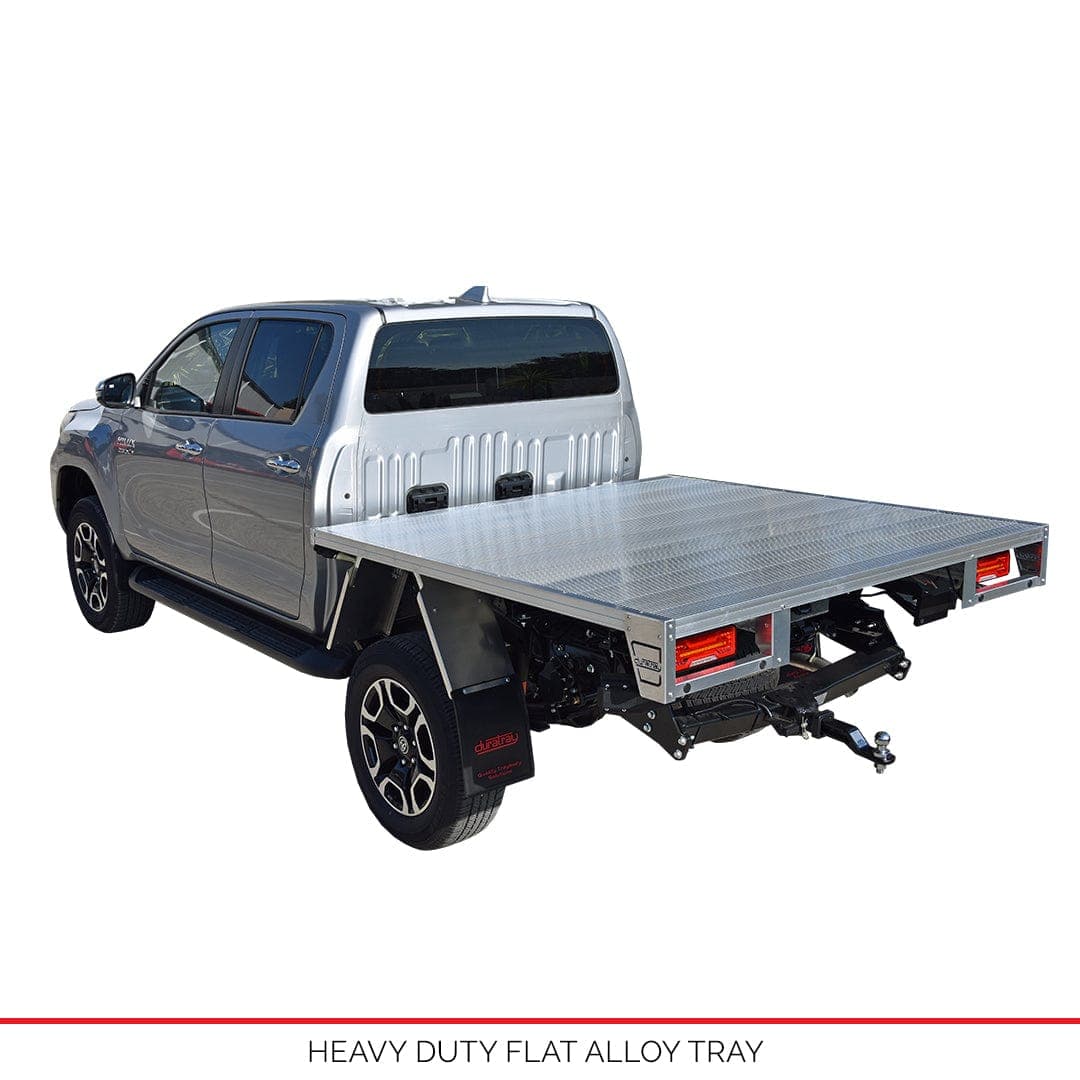
A flat-floor tray (or "flat tray") drops the dropsides for an unobstructed deck — perfect for sheet steel, long timber, glazing frames or any cargo that needs a flat platform with full access from all sides. Here’s when it’s the right call.
Updated 13 June 2026 · By Duratray Transport Equipment
When a flat tray makes sense
- You carry sheet materials (steel, ply, glass) that need to lie flat.
- You load oversized items that won’t fit between dropsides.
- You need full side access for forklifts or pallet loading.
- You’re running a glazing, sheet-metal or specialist trade ute.
Flat tray vs standard dropside tray
| Flat tray | Standard dropside | |
|---|---|---|
| Side walls | None — flat deck | ~225–250 mm dropsides |
| Best for | Sheet, long, oversized loads | Bulk + loose load containment |
| Load restraint | Tie-down tracks essential | Dropsides + tie-downs |
| Load access | From all sides | Top + sides (when dropped) |
Flat trays rely entirely on proper tie-down tracks for load restraint — there’s nothing on the sides to hold loose loads.
Flat HiLux + Ranger trays
HiLux and Ranger are the most-requested flat-tray conversions, popular with sheet-metal trades, glaziers and specialist haulers. We build flat trays sized to your specific cab — single, extra or dual-cab — at the same tray-floor heights as our standard range.
Browse the Flat Aluminium Tray product, see the HiLux tray guide for cab dimensions, or read about custom builds if you need non-standard dimensions.
Frequently asked questions
What is a flat-floor ute tray?
Do you build flat HiLux trays?
Can I have a flat tray with removable dropsides?
How do I tie loads down on a flat tray?
Aluminium or steel for a flat tray?
Are flat trays legal on Australian roads?
Featured in this guide
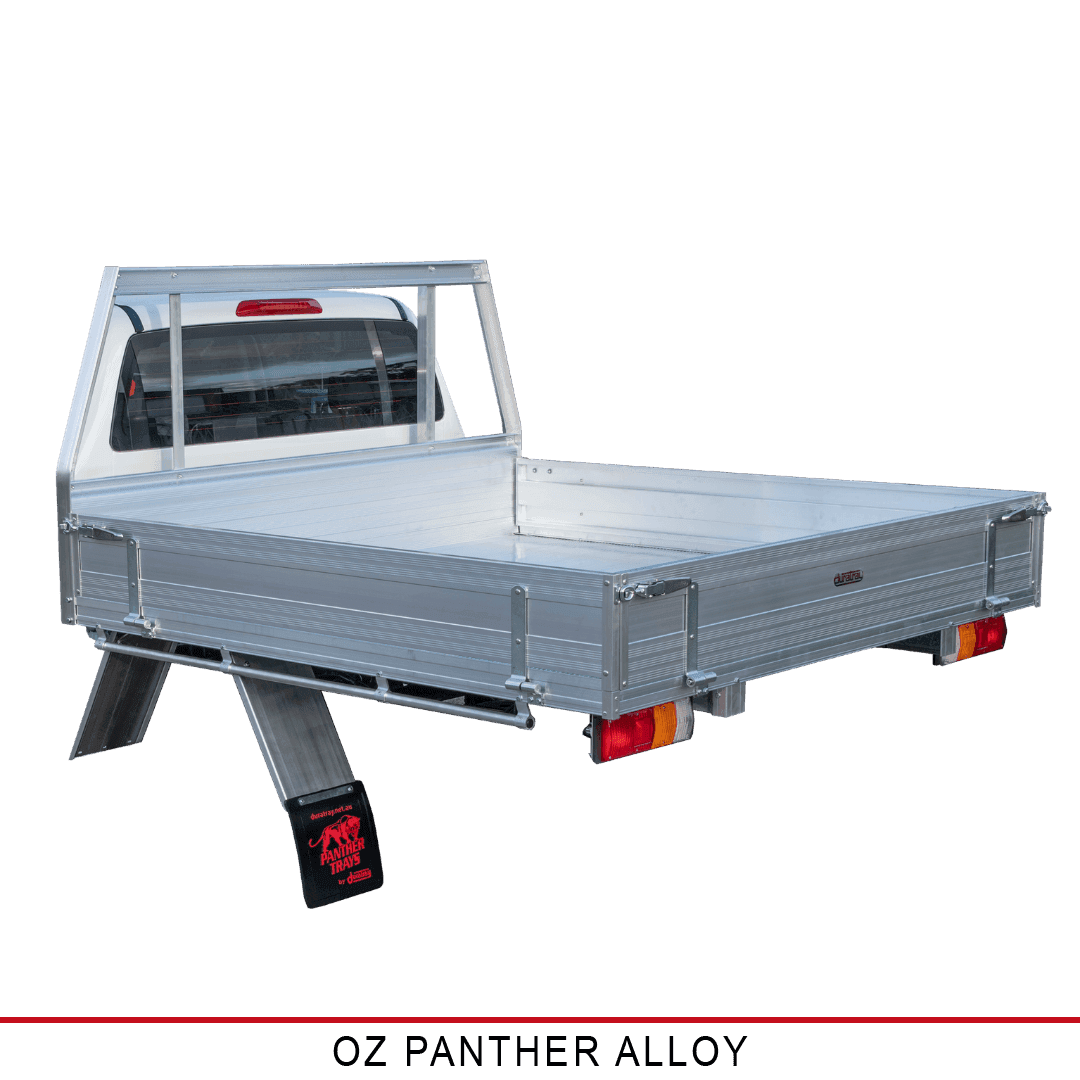
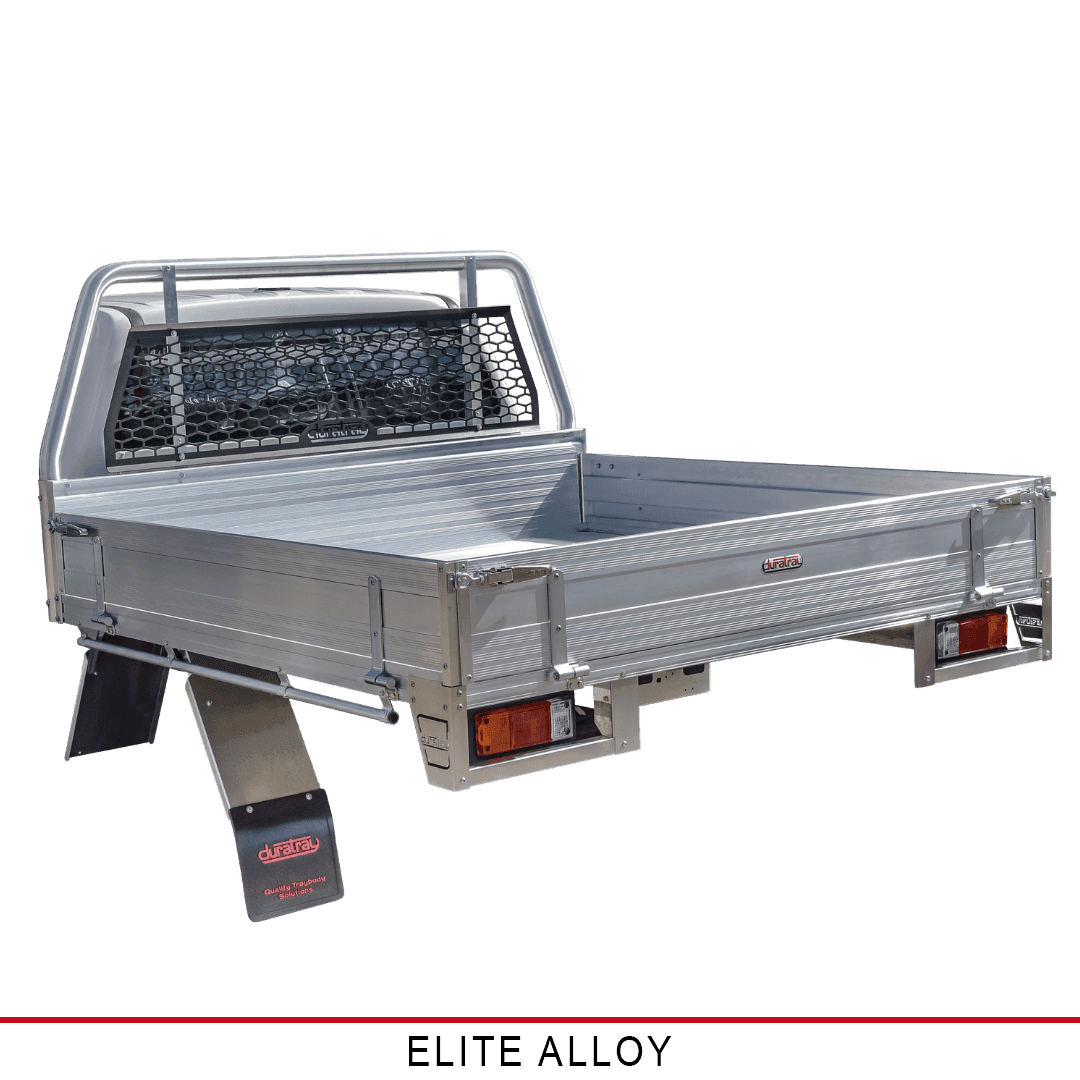
Explore the range
Ready for a tailored quote?
Tell us your vehicle and what you need — we’ll do the rest.